Teenage Sex and Death at Camp Miasma is all about faking it. Just not in the way you think.
Jane Schoenburn’s third feature film follows Kris (Hannah Einbinder), a director who has been tasked with reimagining the Camp Miasma slasher series for a modern audience – she travels to meet with the reclusive Billy Presley (Gillian Anderson), the franchise’s original final girl, who now lives in the remains of the set used for the first movie. But it doesn’t take long for things to get gay, horny, and gory – a personal favourite collection of adjectives – as Kris seems to uncover the strange depths of the legendary franchise and its killer, Little Death (Jack Haven).
As with Schoenbrun’s previous work, there’s a lot to unpack here, so let me start with what’s right there on the surface – Camp Miasma might be their most roundly entertaining work yet, in no small part due to Anderson’s hammy, scenery-chewing Billy – as a genre legend in her own right, Anderson balances the strange tones with ease in what might be one of the best performances of her career, and Einbinder more than keeps up as the hopelessly repressed Kris. Schoenbrun feels more at ease than ever behind the camera, finding obvious joy in playing with incongruent cinematic language to create a clash of tones that’s as unsettling as it is witty, a sensual fingernail plunging into a KFC sauce packet, a slasher chase as erotic thrill.
Schoenbrun’s work so far has dealt with media that’s often landed with the lowbrow moniker – ARGs in World’s Fair, teen TV shows in I Saw the TV Glow – through a cinematic lens that elevates them to vital importance. And Camp Miasma is no different, serving as a gloriously impassioned love letter to the slasher genre as well as a sly state-of-the-union about how the slasher is faring in the era of prestige horror. For all the film’s depth and layers and nuance, there’s a surface-level adoration of this If, like me, you grew up on stuff like Friday the 13th and Sleepaway Camp, Schoenbrun’s intricately-wrought flirtation with the genre is pretty much reason enough to give this movie a shot in and of itself – from the opening credit sequence featuring decades’ worth of referential merch to the wink-wink dialogue that prods in the direction of some of the genre’s more infamous tropes, it’s an off-brand treat that is laced with obvious, bloody affection.
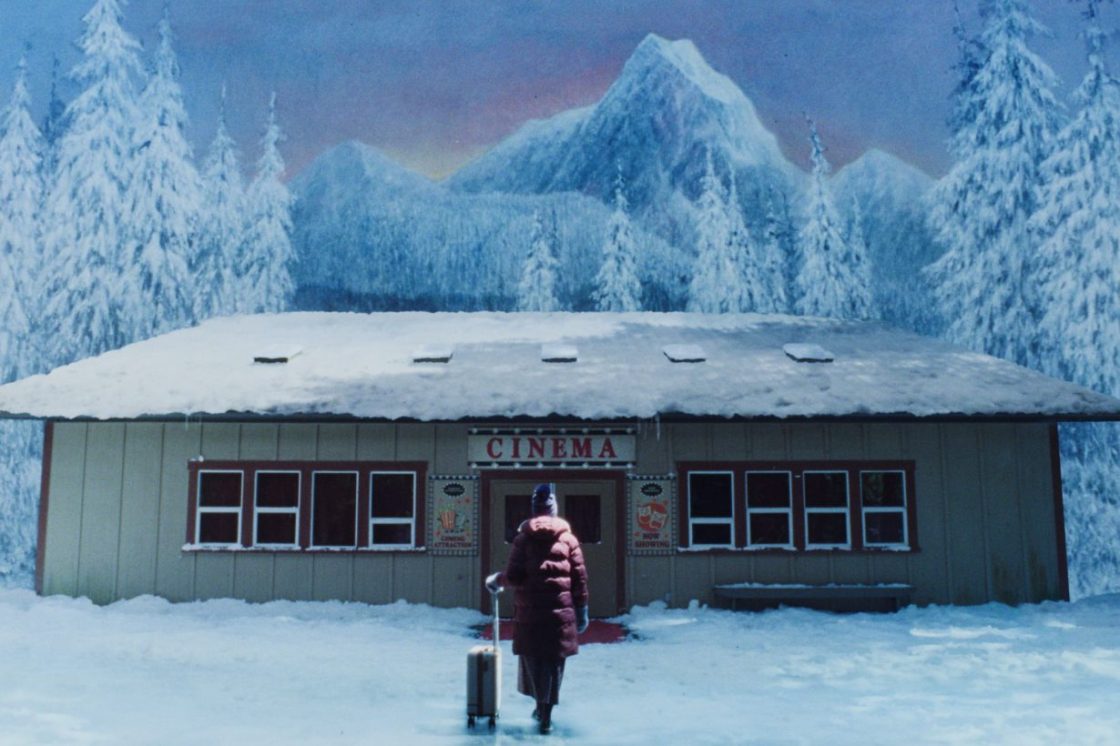
And speaking of obvious affection, we can’t ignore the “Sex and Death” part of the title, can we? Schoenbrun discussed their intentions for this movie as one that rejected the increasingly-sterile approach to sex and desire in the cinematic mainstream, and I think that’s where Camp Miasma really triumphs for me – in finding something real in the midst of something utterly fabricated. The film is laced with artificiality – from the geyser of blood that shoots from the victim of the film’s first kill to the painted backdrops in the camp itself to the brand-name candy and snacks that serve as set dressing for the movie’s erotic encounters, there’s a sense of careful construction that overlays almost everything we see on-screen. The killer, Little Death, is a tangle of fictional stories that have fed on something real, hidden out under a lake in a faux-video rental store. Even Anderson’s Billy is a clear visual reference – acknowledged in-film – to Norma Desmond, a reference wrapped in a reference wrapped in a turban and a silk robe.
In the movie’s central scene, Kris confesses her inability to find real sexual pleasure with her partners unless she pictures herself in the role of one of the teenage victims of the slashers that served as her sexual awakening; as she embodies that near-parody of womanhood, she finds real sexual release, the construct somewhere she can embrace real desire, real passion, real arousal, real climax. Through the lens of the stories we tell and repeat, there is a central kernel of something true, something real – sex and death, flesh and fluids, faking it so you don’t have to fake it, closing in on each other like the perpendicular squares that make up the killer’s mask.
Camp Miasma is a genuinely brilliant movie, one that roundly rejects limited views of sexuality, desire, and violence through the lens of the slasher genre – and yeah, it’s just as bizarre as it sounds. A masterful third feature for Schoenbrun, it’s well and truly cemented them as one of the most compelling and distinct directors of this decade. With the depths of that lake well and truly plumbed, I would like nothing more than to hear what you made of this movie – did it work for you, or was it too meta for its own good? Let me know in the comments below!
If you enjoyed this article and want to see more stuff like it, please consider supporting us on Ko-Fi. You can check out more of my work on my personal blog, The Cutprice Guignol!
By Lou MacGregor
(header image via ArtReview)


One Comment