Brief note to say this article will contain mention of infant death, if that’s something you’d like to avoid.
The Coffee Table does the one thing – the one thing – that movies aren’t allowed to do. Which is exactly why it’s so brilliant.
If you’ve been anywhere near extreme horror spaces in the last few years, chances are you’ve stumbled across 2022’s La Mesita del Comedor, or The Coffee Table in its English release; directed by Caye Cases, it’s a bit of an anomaly amongst those test-your-mettle movies like Audition, The Sadness, or The Human Centipede, in that it’s not actual a horror movie at all. But what could be so horrible that it could turn a movie that’s not even a horror into a legendarily horrible piece of cinema?
Well, I’ll cut to the chase: a dead baby. If there’s one rule that almost all of cinema abides by, it’s that you don’t kill the baby – the symbol of innocence and potential and harmlessness, of all things good in the world, is not what you want to go tossing into the proverbial cinematic wood-chipper, you know? And if you must, then it has to be treated with the utmost, funerial seriousness. Which means no giggling in the back, and certainly not turning the whole thing into a pitch-black comedy of errors as the accidental baby-killer tries to cover up for their fatal accident with the titular table of terror.
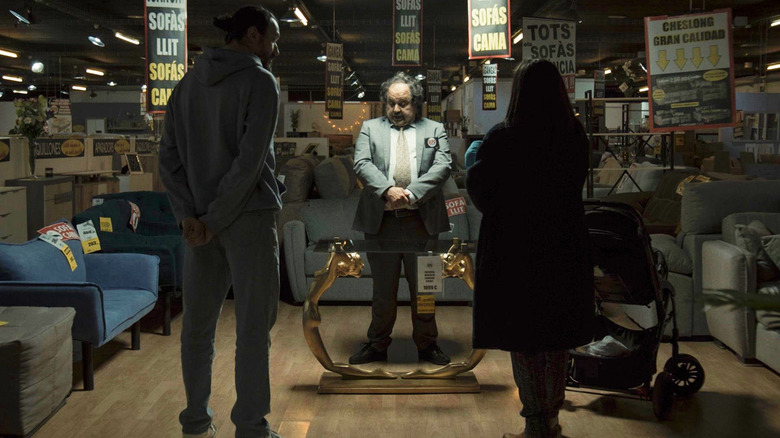
Well, at least, that’s what it used to mean, before The Coffee Table came along to break all those rules in the best way possible. The story follows Jesús (David Pareja), a new father who accidentally decapitates his infant son on the glass pane of a new coffee table. And, look, this movie – it’s exactly as horrible as you think it is. The moment of the accident itself is one of the most stomach-churning, hot-flash-inducing, clammy-palmed moments in all of cinema – Cases captures the pure, destabilising horror in a remarkably effective way, and Pareja’s panic and horror feels about as real as it can, given the circumstances. It’s intensified by the fact that everything surrounds it is pure black comedy – from the niggling marital discord between Jesús and his wife María that first takes shape on the very sales floor that they purchase the coffee table from to the grotesquely inappropriate advances of the teenage neighbour Ruth, the entire movie is off-kilter, the little world that Cases creates so completely bizarre that it almost makes sense that something like this would happen in the midst of it.
The movie’s main conflict comes from Jesús’ attempts to conceal the baby’s death, with the bomb under the table a literal baby’s head under a living room chair. His desperate campaign to keep the horror from his wife and visiting family is a nightmarish twist on slapstick comedy that’s so bleak and so dark that you have to keep reminding yourself that you’re actually watching something like this. It feels almost wrong to say it’s funny, given the premise, but it actually is – a classic bumbling idiot leading man who just so happens to turn things fatal at the worst possible moment, tapping in to the tropes and beats of a comedy-of-errors where the error in question is at nuclear level.
It is horrible, but in that horror, it finds a profoundly twisted humour that’s unlike anything I’ve ever seen – though I totally understand why it’s too much for some people, if you’ve got the stomach for it, it’s a completely unique cinematic experience that has well-earned its status as a legendarily horrible classic. I’d love to hear your takes on it, so jump into the comments and let me know your thoughts!
If you enjoyed this article and want to see more stuff like it, check out the rest of our Evil Dead retrospective, and please consider supporting us on Ko-Fi. You can check out more of my work on my personal blog, The Cutprice Guignol!
By Lou MacGregor
(header image via The 8th Passenger)

