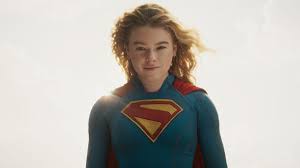
Since the dawn of superhero cinema, there has been an uneasy relationship between the movies themselves and the source material they come from.
For the entirety of the 20th century, superhero comics, and comics in general, were seen as a low art; the kind of thing for children to spend their pocket money on and for adults to get made fun of if they were caught reading them. The eighties saw a slow shift to the contrary, and you probably already know the usual suspects responsible for this: Frank Miller’s Batman Year One, his trip to the future where an older Bruce Wayne takes up the cape and cowl once again in The Dark Knight Returns, and Alan Moore’s serious and satirical masterpiece, Watchmen, while John Byrne’s run on Superman and Chris Claremont’s X-Men saga deserve a mention too.
Hollywood did not get the memo regarding this new period of legitimacy. You could forgive Richard Donner for his excellent-in-its-own-right Superman: The Movie, because he was creating this version of the blockbuster from scratch. The same can be said for Tim Burton’s Batman movies since comic book fans were happy that the character resembled the darker eighties version in the comics and wiped the taste of Adam West – and boogieing – out of their collective mouths. Hollywood, despite the ridiculous money that Superman and Batman made at the box office, always seemed embarrassed by those character’s original medium.
Every superhero movie that followed followed the same pattern: take the iconography that they can put on merchandise and ignore the stories that brought them to the attention in the first place. This carried on right up to the new comic boom that began with Blade and solidified with the first X-Men. It wasn’t until Sam Raimi’s Spiderman trilogy that the tide began to turn. Not only did Raimi love the comics, he was also inspired by the nineties cartoon (which is still amazing and probably the best non-comic version of the hero). The ridiculous money that they made proved to Hollywood that actually reading these funny little picture books and using them as inspiration gave you not only a bigger audience, but also one that felt more connected to the product. Then came the new problem.
Take the Nolan Batman trilogy – a terrific set of films made by a passionate Batman fan. Watching the trilogy, you can see the influence of Miller’s aforementioned Year One, Jeph Loeb’s The Long Halloween, and Alan Moore’s The Killing Joke. Nothing wrong with that – they are all great comics – but from then on, it felt like those were the only Batman comics that Hollywood knew about. How about Brett Rattner’s X-Men: The Last Stand? The plan for this trilogy-capper is to adapt both the Dark Phoeinx Saga and the Joss Whedon arc from the early noughties about a mutant cure – and he screwed them both up so badly that the movie is more know for its stupidity than the operatic space that big X-Men stories reside in.
Then there is friend of the site, Zack Snyder. I have many articles about how I think his DC movies failed, but the first and foremost reason was, like Ratner, not understanding what he was adapting. Take Batman Vs Superman: For the second movie in a new cinematic universe, Snyder decides to adapt Doomsday to kill a Superman we barely even know, and make his Batman the grizzled The Dark Knight Returns version. Now, if you’ve seen Watchmen, you know that Snyder doesn’t have any sense of irony whatsoever – the Batman of The Dark Knight returns is a nightmare version of the character. He is Miller’s symbol of how far Bruce Wayne can go, how being the Batman is an obsession that can never be defeated. He is not fodder for a burgeoning cinematic universe trying to rival the bright and colourful (well, moreso than this) Marvel Cinematic Universe. These two comic stories go about as well as trying to adapt The Da Vinci Code and Of Mice and Men into the same movie.
There are some notable anomalies – Wonder Woman 84 ignored the entire canon to give us, well, that, and Taika Waititi proving that I’ve read more Thor comics than him (and I’ve only read one) to create two movies powered by vibes. Oh, and there was another Dark Phoenix botch but the less said about that the better. Despite all of those, I thought Hollywood had learned their lesson. Then came Supergirl.
Peter Safran and James Gunn talk a big game about trying to get the trust of fans back after the DCEU crashed and burned. Gone were the days of adapting Flashpoint, a story that requires a wealth of knowledge about DC comics, because it might be the only Flash comic us rubes (read: not a reader of The Flash) have ever heard of. Well, it only took them two movies to screw up that approach.
Supergirl takes most of its story from Tom King’s Supergirl: The Woman of Tomorrow, an excellent miniseries that lifts many plot details from the western novel. This comic is part of DC’s more experimental Black Label imprint, a place were you can see Batman’s dick (remember that?), Harley Quinn as a detective chasing The Joker in an homage to Silence of the Lambs, and Wonder Woman waking up after the apocalypse. Supergirl takes the role of the aged gunslinger, though she’s only 21 and got drunk once on a planet with a red sun, who helps a young girl pursue the man who killed her father and also poisoned Krypto. The point of the story as it concerns Supergirl is to show how she has grown into a woman that she can be proud of, mainly seen through the eyes of her young companion. Supergirl herself doesn’t have the clear arc – in fact, she doesn’t change all that much because this is a story set after years of toil and triumph.
So what do Safran, Gunn, and director Craig Gillespie do with it? They replace this grittier version of Supergirl from the source material with the brattier, less-rounded version who matched with the first Superman movie. Once again, like all the other examples, it proves that Hollywood still hasn’t learned this important lesson – instead of adapting something from comics in which Supergirl has to come of age, like she is supposed to in the movie, they dump her into a story in which this version just doesn’t fit. It would be like making A New Hope, and it was Phantom Menace Anakin walking out of the darkness to order the stormtroopers around. There’s a fundamental clash between story and character here, and it’s one of the major reasons, in my opinion, that this movie has proved such a flop both critically and for fans of the character.
It surprises me because these are supposed to be the people who actually get and value comics. Instead, they may as well have the next Superman movie ending with him flying around the world to turn back time to avoid making this mistake in the first place – but that’s not enough to strike this fumble from memory.
If you enjoyed this article and want to see more stuff like it, please consider supporting us on Ko-Fi!
By Kevin Boyle
(header image via BBC)

