It’s odd to think that the zombies we know and love – the peckish, mindless shamblers hungry for human meat – are a relatively new invention.
Here we are in our second decade of Season of the Dead, and we are still in the realm of white dudes using Vodou to scare white audiences. While White Zombie was more obvious with this approach, legendary writer and producer Val Lewton along with director Jacques Tourneur (best known for the iconic Cat People, which came out the year before Zombie) took these tropes and added as much romantic drama they could into just under seventy minutes to create I Walked with a Zombie in 1943.
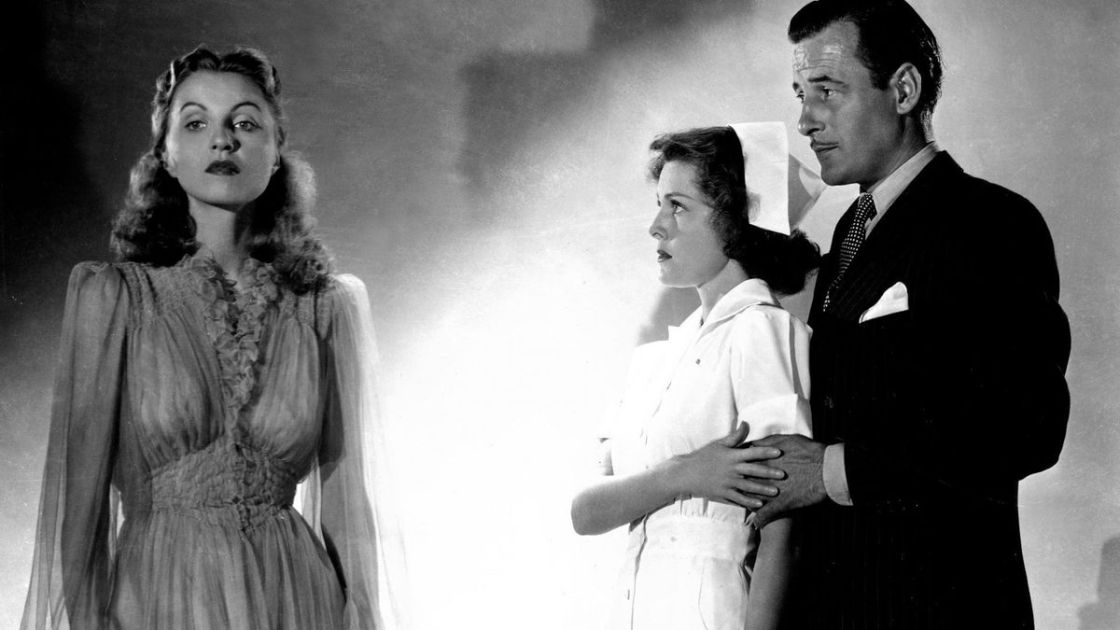
I Walked with a Zombie is one of the weirdest movies I have ever seen. For one, it certainly doesn’t deliver on what you might expect from the title. The story begins with a nice yet naïve nurse named Betsy who has been hired to care for the wife of a wealthy man based in San Sebastien, a small Caribbean island where the natives practice Vodou. Betsy thinks everything is just bloody brilliant, to the point where I wondered if she herself endured a head injury off screen, but her sunny inner monologue is interrupted by her employer, Paul Rand (played with quiet cruelty by Tom Conway) on the boat to the island. Reacting to Betsy’s rays of sunshine, he remarks:
“It’s easy enough to read the thoughts of a newcomer. Everything seems beautiful because you don’t understand. Those flying fish, they’re not leaping for joy, they’re jumping in terror. Bigger fish want to eat them. That luminous water, it takes its gleam from millions of tiny dead bodies. The glitter of putrescence. There’s no beauty here, only death and decay.”
And that is before we even get there. Betsy is even more ignorant when her Black cab driver tells her the story of how his people came to be on the island: “…it was once the figurehead of a slave ship. That’s where our people came from. From the misery and pain of slavery. For generations they found life a burden. That’s why they still weep when a child is born and make merry at a burial… I’ve told you, Miss Connell: this is a sad place.” Betsy’s reply is about how nice the island is. Oh, Betsy. You haven’t even met the damn zombie yet.
Lewton and Tourneur used the outline of the zombie movie of the time to tell their own version of a very intense love story. Jane Eyre is the primary influence on I Walked With a Zombie with Betsy and Paul as Jane and Rochester respectively. Jessica, the zombie of the title, is Bertha, the insane wife in the attic – well, tower. It is never explained why she constantly heads for the tower but I like to think that is where she and Wesley would meet in secret. You can see by the way the film is shot, there is more beauty here than despair in the imagery of the island, except for the expertly-paced run through the fields. I
I Walked with a Zombie is a film about, as the above quotes underline, living with contradictions and the tension they bring. Betsy brings healing and goodness to the Rand’s world, whereas the titular “zombie” is a source and a symbol of darkness. Paul and his brother Wesley, one educated in England and the other in America, are in constant psychological warfare with each other with Jessica in the middle. Their mother, Mrs Rand (Edith Barrett), is a doctor who engrossed herself in Vodou and believes that her embrace of those practices, along with her own hate, caused Jessica’s condition. The Rand family line is. through the actions of Jessica and Mrs Rand, decomposing, the zombiefication here a metaphor for the erosion of this family unit.
Betsy seems to be the answer for Paul, even willing to try to cure Jessica with Vodou, only to be stopped by Mrs Rand. Chris Fujiwara in his essay for the Criterion collection perfect;y describes the tension that comes from the presence of Vodou:
“To be sure, the main characters of I Walked with a Zombie are white, and several times in the film they deplore and ridicule Vodou. Yet they are forced to acknowledge its power…Jessica’s new nurse, seeks “better doctors” at the houmfort (Vodou temple). There, the celebrants recognize Jessica as a zombie; this diagnosis, and their attempt to have Jessica returned to them, threatens the ideological foundations and perhaps the political stability of San Sebastian, forcing the local commissioner to intervene.”
Vodou and the natives of San Sebastien are framed as the path not taken due to superstition and fear. All of the violence, ill feeling, and misery comes from the Rand house. If Jessica was allowed help from the natives, would she have recovered? Tourneur and Lewton treat the natives of San Sebastien and their culture with a degree of respect, and use the racism built of arrogance towards their culture ultimately doom Wesley and Jessica.
I Walked With a Zombie is a story at war with itself and that is a very good thing. In just under and hour, Lewton and Tourneur crafted an epic romance interwoven with a supernatural story. Not bad for a B-picture.
If you enjoyed this article and want to see more stuff like it, please consider supporting us on Ko-Fi.
By Kevin Boyle
Header Image: Letterbox


3 Comments