Welcome to Halloween season here at No But Listen, friends, freaks, foes, fans, and everyone else. A few years ago, we did a deep-dive into Dracula through the decades – covering movies that featured the iconic bloodsucker from Nosferatu to Dracula 2000. And this year, we’re going to take a look at another movie monster with a storied movie history: the zombies. While this isn’t going to be a completely comprehensive dive into zombie movies through the decades – because that would require about two hundred more articles and another year of research time – we’re planning on diving in to some of the significant zombie movies of the past hundred years or so, to track how this legendary horror monster has taken shape over the decades.
And we’re starting in 1932, with Victor Halperin’s White Zombie. While there were certainly movies that dealt with the living dead before this – probably most notably 1919’s romantic war epic, J’Accuse, which featured the war dead emerging from their graves to judge the living – this is likely the first surviving horror take on the classic zombie trope.
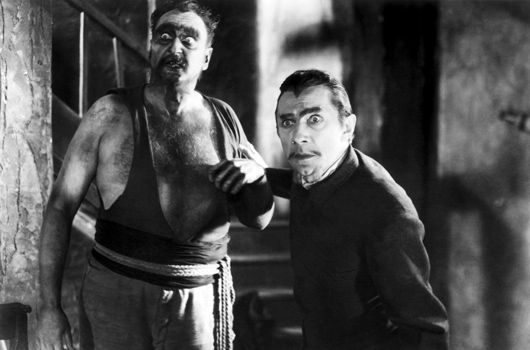
White Zombie was directed by Victor Halperin, and stars Bela Lugosi (who’s probably best known for his role as Dracula, which released just a year before this), who plays voodoo master “Murder” Legendre, the villain of this piece. It drew inspiration from some contemporary media portrayals of zombie – a Broadway play by Kenneth Webb and the 1929 novel The Magic Island that depicted Haitian Voudo – which writer Garnett Weston mashed together into this script. From the off, the movie was not exactly one that seemed to fill studios with confidence; it was produced independently by Halperin and his brother, and was shot in under two weeks on Universal Studio lots entirely at night to reduce costs, and Lugosi’s involvement in such a low-budget movie came as a surprise coming off the success of Dracula (with his wages making up around 10% of the entire budget, according to some estimates).
Given that the movie is the better part of a century old now, I think White Zombie, from a filmmaking perspective, actually stands up pretty well – some of the acting leaves something to be desired, but Lugosi’s commanding presence is enormously entertaining, especially those iconic glowers in close-up that serve as the movie’s most recognisable calling card. Halperin creates an appropriately gothic tone with stark shadows, gorgeously-elabrorate sets, and fantastic costume design. The entire movie is available to watch online for free, and if you’re so inclined, it’s just over an hour long and makes for an interesting look into pre-Code horror.
But we’re here today to talk about the zombie part of this title specifically, so let’s jump on into it.
The zombies themselves, at a glance, are actually a reasonably close relative of the modern zombie. While there’s none of the soon-to-be-standard brain-hunger or flesh-eating, their blank expressions, deathly pallor, and stiff, jerky movements bear more than a passing resemblance to the zombies that would come to populate movies in decades to come. However, the most notable difference here is probably that they are under the control of an overseeing force – in this case, Legendre, whose power over them dissipates when he dies at the end of the film. The zombification is not physical infection but magical.
The conception of the zombie in this movie relies heavily on then-popular stereotypes about Haitian Vodou, exoticizing certain practices and lending them a distinctly disturbing bent; as Haitian arts’ charity FreeHaiti notes, the film reduced “complex spiritual practices to little more than witchcraft and sorcery”. The primary victim of the zombification is a young white woman, Madeleine (Madge Bellamy), who visits Haiti to marry her beloved fiance before intervention from Beaumont (Robert Frazer), who enlists Legendre’s help to poison her and bring her under his thrall. The racial politics of White Zombie are pretty unavoidable – the innocent white woman consumed by powers of Vodou a reflection of broader narratives about the corrupting influence of non-white culture – with one character declaring, upon discovering the turning of Madeleine into a zombie, that she is “in the hands of natives – better dead than that!”.
But she’s not the only zombie in this movie – no, Legendre runs a cane-grinding mill which is staffed by zombies who have been similarly stripped of their autonomy and forced into indentured servitude under his control. The racial identity of Legendre, though played by the white Lugosi, is never made fully clear, but some readings of the film cast him in the role of a metaphorical plantation owner; in her excellent piece “Colonial and Post-Colonial Gothic“, Lizabeth Paravisini-Gebert draws comparison between “terrorized Haitian peasant” condemned to work under a cruel and dehumanizing master and slavery, “the allegorical impulse manifest in the identification of slavery and colonization with zombification”. And that, I think, is one of the biggest things White Zombie has going for it that connects it to future zombie cinema – the zombie as a metaphor for a grander cultural anxiety, which is something that we’re going to see a lot (and I mean a lot) of in the coming weeks.
So, please join us for the next month as we delve into the Season of the Dead! Feel free to let us know what zombie movies, old or new, should make the cut, and, if you’ve seen White Zombie, what you think of it as a way to kick off our brief history of zombie cinema in the comments below.
If you enjoyed this article and want to see more stuff like it, please consider supporting us on Ko-Fi. You can check out more of my work on my personal blog, The Cutprice Guignol!
By Lou MacGregor
(header image via Classic Monsters)


3 Comments