There is still time.
Before I actually sat down to watch I Saw the TV Glow last month, there was one image from the movie that I had stumbled upon above all else, and it was this one.
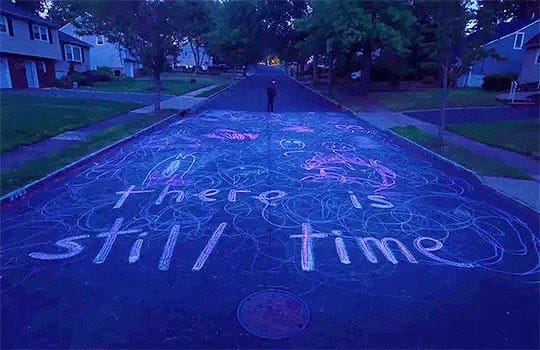
It’s a gorgeous, striking image – I didn’t need much convincing to give Jane Schoenbrun’s sophomore feature a shot after the sensational We’re All Going to the World’s Fair, but if I had, this would have been it. And, a year after its initial release, I think the iconographic status this scene has taken on actually says a lot about the film as a whole.
And let’s be clear – the film as a whole is superb. It’s one of the most compelling, disturbing, and inventive explorations of identity through the lens of media in general and horror in particular. It’s an incredibly potent metaphor for the queer experience in general and the trans experience in particular, and I’d recommend reading some of these articles about the aspects of trans identity at play in the film.
But what I’d like to focus on is the ending – or rather, the lack of it.
The last fifteen minutes or so of the movie have been playing in my mind ever since I first saw them at the beginning of this month; Owen (Justice Smith, in a performance that’s going to be hard to top), decades after his initial encounter with Maddy and The Pink Opaque, is working at a children’s birthday party when he has a complete breakdown. Screaming and begging for help, he insists that he’s dying, before excusing himself to the bathroom and opens his chest with a box cutter. In the wound, he sees The Pink Opaque playing on a TV screen, and smiles. Exiting the bathroom, he apologizes to his colleagues and customers, and the movie ends, almost abruptly, with his apology.
What’s interesting about this moment, at least to me, is that it’s only one version of the ending Schoenburn initially intended for the movie. In another version, Owen races through the laser tag arena in a more explicit acceptance of the identity that he has been trying to contain – Schoenbrun decided against it in the final cut, considering it “unearned” as part of the movie’s existing narrative. And I think this was entirely the right choice – I Saw the TV Glow is a profoundly disturbing and evocative movie that defies easy answers from top to bottom, and an ending that is, in many ways, as ambiguous as the one we get fits it far more comfortably.
But beyond that, what I love about the close of I Saw the TV Glow is what it’s come to mean in the year or so since the film first came out. The movie is, fundamentally, a story about the ways in which art creates space for us to navigate painful or difficult topics – The Pink Opaque serves as a metaphor for the true identities of Maddy (Jack Haven) and Owen, and, in its way, the movie itself has become that media for many people navigating similar questions of identity, sexuality, and gender. Metatextually, the movie ends as ambiguously as it does because it is tied to the audience’s interpretation of the events and characters; whether Owen walks out of that bathroom accepting of who he is, more in denial than ever, or some place in between is entirely left to the point of view of the person watching it. In much the same way The Pink Opaque’s importance does not end where the show does, I Saw the TV Glow extends beyond the confines of its actual runtime, too.
And that, to me, is what makes the nature of the There Is Still Time scene so profound. In the same way that Maddy in the movie answers questions of their identity through The Pink Opaque, the community around I Saw the TV Glow answers the question of the ending through what they’ve elevated to the most iconic image in the entire movie. That’s the phrase that the fandom has elevated above everything in this movie – the simple promise that, no matter what, there is still time.
And that’s the real ending of the movie to me, the one Jane Schoenbrun deliberately chose to leave open – no matter the nature of Owen’s revelation at the end of the film, there is still time for him, and for the rest of us, too.
I know it’s a profoundly personal and impactful film for many – that’s my take on I Saw the TV Glow, and I would love to hear yours in the comments below!
If you enjoyed this article and want to see more stuff like it, please consider supporting us on Ko-Fi. You can check out more of my work on my personal blog, The Cutprice Guignol!
By Lou MacGregor
 No But Listen