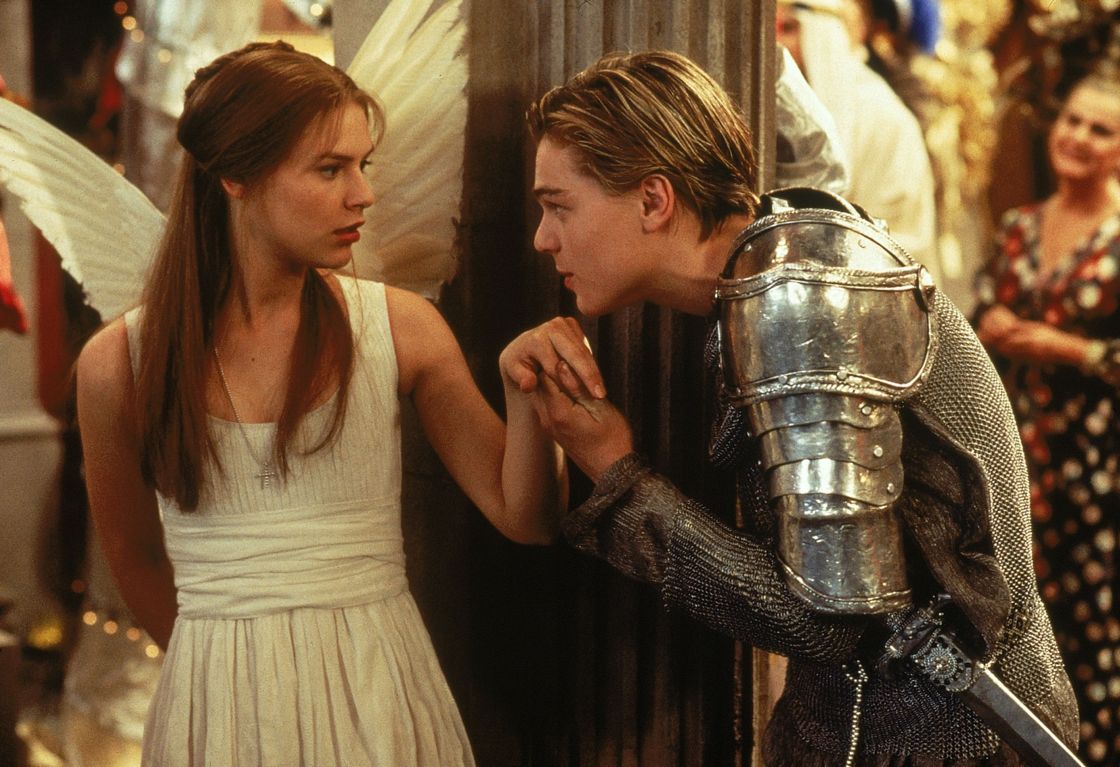
I’ve written about my passionate love for the Shakespeare play Macbeth on this fine blog before, but I have to admit – outside of that, I am not exactly bonkers for the Bard. It’s not that I don’t appreciate a lot of his (or their, if you subscribe to the multiple authors theory, but that’s another debate for another time), but I don’t find myself drawn to adaptations very often, because they often feel so inaccessible. The language can feel so far removed from what we’re used to, and the historical settings and mores don’t give us much space to tap in to context to make sense of it. Sometimes, it feels like the best way to go into a Shakespeare adaptation is to do your homework first, and that’s not always the most appealing way to approach a movie, you know?
But there’s one Shakespeare adaptation that I truly am bonkers about, and one that I feel like doesn’t get enough credit for the skill it displays in turning this language and these stories into accessible modern cinema. And that, of course, is Baz Lurhman’s 1996 movie, Romeo + Juliet.
I mean, let’s just take it from the top in terms of what this movie has going for it: that sensational neon Catholic aesthetic, the perfect, inventive casting (Pete Posthelswaite as the weed-growing monk? God, yes), some career-best performances from fabulous actors (Harold Perrineau as Mercutio imprinted on me for fucking life, I am not kidding), and just a general sense of high-school romantic drama wrought on the dramatic scale most high-schoolers actually think it’s functioning at.
But the real triumph for me in this adaptation is how brilliantly Lurhman contextualizes Shakespeare’s dialogue. It’s almost as though Lurhman and co-writer Craig Pearce took the centuries-old language as a challenge, not an obstacle – how can we make this make sense in a modern context? What results is this gloriously stylized and inventive take on a modern-day teen romance, where this Shakespearean English makes total sense by sheer power of contextual clues. The modern setting offers the context clues to make sense of this language, but more than that, they do it in such a joyfully playful way that the film is an utter delight as a result.
From Mercutio’s “by my heel, I care not” as he flashes his pair of heelie sneakers to the Daggers and Rapiers as brands of gun, pretty much everything is accounted for here, and it creates this vibrant, rich, and totally unique style that bends to fit this language and this story. I think the over-the-top approach really serves the teen drama at the heart of this story, too, because what is Romeo and Juliet but a pair of teenagers getting way too invested after a single shag? It feels right that everything should be so absurd, a reflection of the absurdity of this po-faced and slightly silly mutual obsession of teen romance.
It’s a completely unpretentious take on Shakespeare, and yes, it’s helped along by the recognizable nature of the story – a shorthand for romantic tragedy in and of itself – but the level of effort put in to turn this into a truly universal movie is a lesson in how to make Shakespeare accessible.
If you enjoyed this article and want to see more stuff like it, please consider supporting us on Ko-Fi. You can check out more of my work on my personal blog, The Cutprice Guignol!
By Lou MacGregor
(header image via Harper’s Bazaar)


The best adaptation! Props to Lurhman, Pearce and the brilliant cast and crew. Pete Posthelswaite as the weed-growing Friar, Lawrence – 100% a vibe. The soundtrack too.
LikeLike
Reblogged this on The Cutprice Guignol.
LikeLike