Wuthering Heights is an incredible book.
One that, even today, carries a lot of weight and challenge in the themes it takes on (and if you don’t believe me, give it a read). The iconic central pairing Heathcliff and Cathy are fascinating characters, a folie a deux playing out over the barren, brutal backdrop of the Moors, trapped by cages of class, gender, and, depending on your reading of Heathcliff, race; they are violent, both emotionally and physically, cruel, and downright poisonous to virtually anyone they come into contact with, including each other. Wuthering Heights is a story of revenge, the plague that Heathcliff embodies on both the Linton and Earnshaw clans that spans generations in its obsessive focus, and it is mad and brilliant and impossibly compelling and one of the greatest books of British gothic canon and just of all time. And I say all this because I think it’s worth remembering when we talk about the absolute juvenile disservice that Emerald Fennell has done to it in her 2026 adaptation.
Let’s talk about it in relation to the book first, since this is, even in the loosest definition, meant to be an adaptation of the story. I don’t think an adaptation has to be slavish in its approach to the original text; look at Guillermo Del Toro’s Frankenstein, as a recent example of a film that captured the central themes of the book without adapting it beat-for-beat. But Fennell’s Wuthering Heights betrays what is, to me, a fundamental misunderstanding of the story, and a bastardization which seems clearly intended to pander to what Fennell images the modern romance fan is looking for.
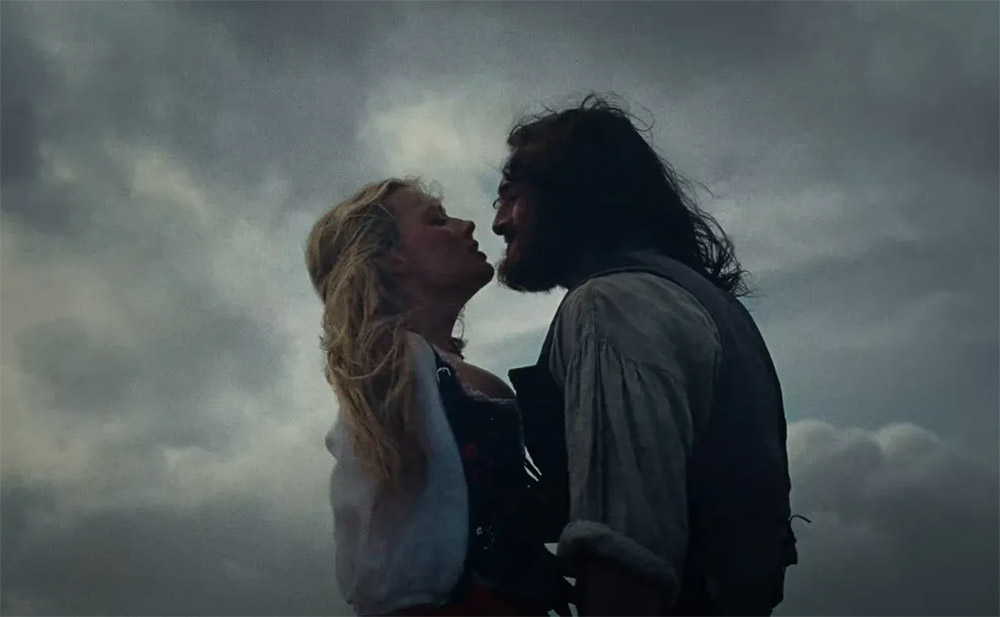
Fennell handwaves in the direction of the central themes of class and gender, more as set dressing than anything else – she eviscerates Cathy and Heathcliff (played by Margot Robbie and Jacob Elordi) into doomed lovers who are, at worst, A Bit Shit. Their venomous monstrousness, violence, and cruelty have vanished here for a bit of back-and-forth that’s clearly meant to drip with sexual tension but more drips with a cringe I thought limited to TikTok boyfriend POVs. It’s clear Fennell wasn’t willing to push Heathcliff past any point that might make him undesirable to a modern female audience – the complicated relationships he shares with the other members of Cathy’s family are hopelessly muted or cut entirely, and the horrendous abuse he inflicts on Isabella Linton (played by a brilliant Alison Oliver here) is rewritten, in insulting fashion, as a kinky BDSM roleplay that she actually wanted and asked for. With the third act of the book entirely absent, his obsessive destruction of the Linton and Earnshaw families is gone, and so, with it, is most of the really compelling aspect of his character. Robbie’s Cathy plays out more like a period piece Miss Piggy than the frustrated and ferocious caged animal that Cathy feels like in the book, clad in a series of bizarre costume design choices that don’t really serve to give the movie a distinct visual feel but rather leave me wondering why she’s spending her wedding night wrapped in cellophane. With Nelly (Hong Chau) downgraded from narrator, she’s just left standing awkwardly in the background of most scenes, a complete waste of Chau’s brilliant chops.
Of course, one of the most prominent and highly-touted changes in the movie comes in the form of sex. Lots of it, lots of versions of it, lots of people fingering mounds of egg sputum and slugs suggestively crawling up windows, the servants engaging in kinky horse roleplay while Cathy watches. The film opens with the moaning and gasping of a man being hanged, clearly intended to sound orgasmic, obviously preening about its Very Clever Exploration of the connection between sex and death, and then it just…goes on to touch on none of that in a meaningful fashion. And, to make it very clear, I absolutely think sex can be a storytelling tool, especially in a film like this one, which purports to be so much about the desire, thwarted and otherwise, between Cathy and Heathcliff. But Fennell’s approach to it is just so unrelentingly juvenile – there’s less chemistry here than there is in a single scene of two people breathing near each other in Decision to Leave, and it feels more like we’re ticking off the BookTok romance tropes than exploring what it means for these characters to desire each other in the face of forces keeping them apart. Even the forces keeping them apart (in this case, mainly Cathy’s marriage to Linton, a role which wastes a very impressive Shazad Latif) don’t feel that impervious – there’s no indication that they couldn’t reasonably just fuck off together after Heathcliff’s return and save everyone the bother, and, even when they’re exposed, they’re met with little more than a polite request that they don’t fuck in the Linton manor at least quite so obviously. The book is so challenging and compelling in so many ways, and Fennell seems to have gone out of her way to remove each one and replace it with another scene of someone putting their fingers in someone or something else’s mouth. At least the fucking-on-the-Moors montage gave me time to think about what I needed to pick up from the shops on the way home, I guess.
And there’s the other issue – sure, the film fails as an adaptation of the book, but it also fails to be a decent film in its own right where it diverts from it, too. The dialogue is consistently dreadful and painfully repetitive, the lead performances downright bad (even though both Elordi and Robbie are great actors in their own right), the production design (aside from the Heights themselves, which are, without a doubt, gorgeous) oddly stylized in a way that never really makes sense for the story. Fennell has an eye for good cinematography, and there are a handful of really beautiful shots, but that’s about all I could muster interest in over the course of the insufferably bloated two-hour runtime.
Wuthering Heights is a bad film and a bad adaptation. It’s not a story about an unrealized obsession that haunts, literally and metaphorically, these families in gloriously gothic fashion – it’s a tragic romance, and not even a very interesting one at that. A virtually illiterate version of the book, Fennell’s Wuthering Heights is an embarrassing, indulgent, and worst of all, boring take on the enduring brilliance of Brontë’s novel.
If you enjoyed this article and want to see more stuff like it, please consider supporting us on Ko-Fi. You can check out more of my work on my personal blog, The Cutprice Guignol!
By Lou MacGregor
(header image via HeyUGuys)
 No But Listen