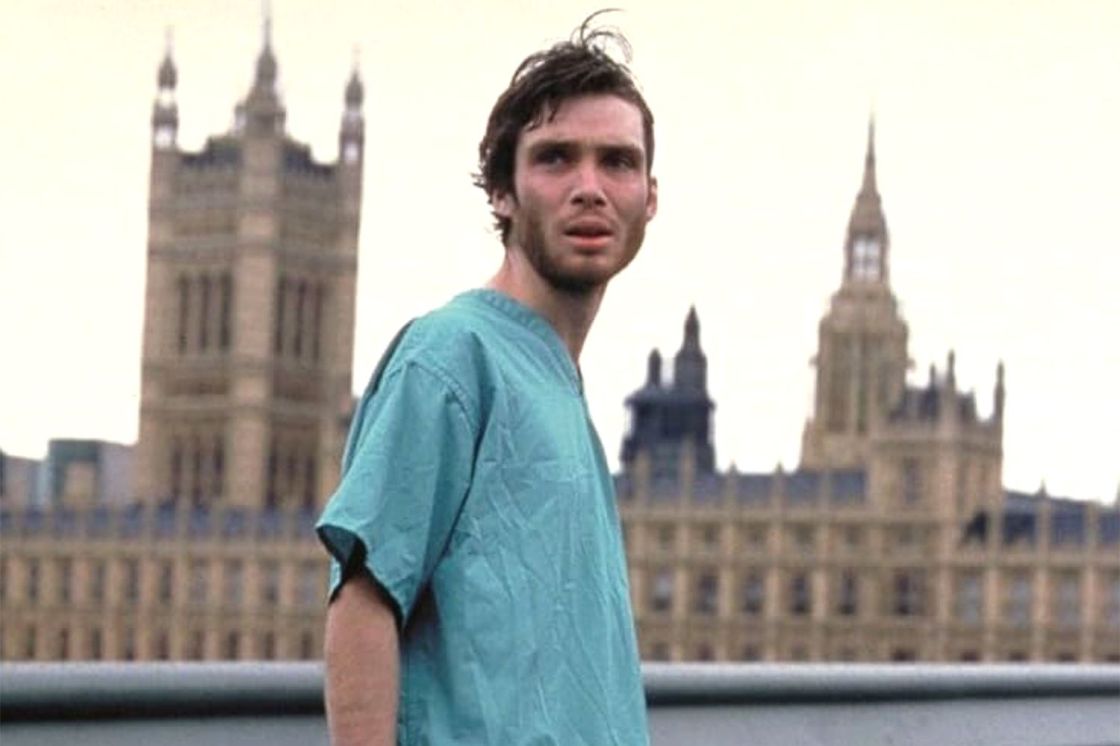
It is hard to believe now, considering the hordes and hordes of zombies that have infected pop culture in the 21st century, that Danny Boyle and Alex Garland’s small independent masterpiece was what kicked it all off. Without 28 Days Later there would be no Dawn of the Dead remake, Shaun of the Dead, The Walking Dead, and a million other riffs on this horror sub-genre.
The undead creatures, which graduated from voodoo films like White Zombie in the 30s, to George A Romero’s Dead trilogy spanning three decades, seemingly ran out of steam in the 90s: spurring Garland to have his own shot at it with sprinklings of the aforementioned Romero films, and the sci-fi tales of the legendary British author John Wyndham. Yes, I know they are not technically zombies but they are a riff on them that has influenced their portrayal in the decades after 28 Days Later was released.
Not only did the film revive an ailing monster, it also rescued the film careers of its writer and director. Danny Boyle burst on to the scene with his Scottish one-two punch of Shallow Grave and Trainspotting: films that define the overwhelming cultural force of Cool Britannia in the early to mid 90s. From there Boyle floundered, with his next two films: the underrated and blatantly ridiculous A Life Less Ordinary, and flopping of his Leo DiCaprio vehicle, The Beach which was his first collaboration with Alex Garland who adapted his own debut novel (a medium that suits the story much more).
To recover from these disappointments, the two decided to get back to independent filmmaking: a place of strict budgets and problem-solving, hiring a cast of mostly unknown actors; with the exceptions of Brendan Gleeson, and the return of Shallow Grave’s Christopher Eccleston. The result is one of the defining horror films of the 21 century, full of great performances, simple and effective character beats, and iconic image after iconic image.
Before this article I had only seen 28 Days Later once, back in 2013. I had seen a clip of the infected priest when I was 12 and said “fuck that!” for eleven years. I liked it well enough: the infected sequences where good, the mean streak of Garland’s script felt appropriate, and the deserted London and surrounding countryside gave me an eerie feeling that has only been matched by the reality of the empty streets during lockdown.
Some great films show you their strengths right away. I appreciated Jim’s London stroll, Selina’s brutal slaying of her companion after he might have been bit (this scene is one of the best at showing the stakes and danger of a situation in all of cinema), and the rats running away from the infected made me queesy. It was the second watch that unlocked the characters for me. Jim and Selina begin on opposite sides of the aisle. Jim, who has only woken up to this world is completely unprepared for it. He spends the film slowly accepting that, in order to survive, he is going to have to let go of his notions of morality and humanity. So much so that when he storms that state house housing the soldiers that have kidnapped Selina and Hannah, he resembles the infected more than himself to the point where Selina nearly mistakes him for one due to his brutality.
Selina starts where Jim would have ended if he didn’t have her and Hannah to hang on to. Her world view is one of survive at all costs, to the point that she resembles the personification of her machete than a human being. It’s her getting to know Jim, and later Hannah and her tragically unlucky father Frank, that gives her some of that humanity back. Even in a weaker position, while captured by the soldiers, she wants to save Hannah more than herself and even hesitates when nearly killing Jim: something she assured him she would do in a heartbeat earlier in the film. As I said, simple character beats that are completely effective due to relevant stakes and committed performances.
Like Night of the Living Dead, or Evil Dead, or even something a bit more modern like the first Insidious film, 28 Days Later will never be matched; even by its own sequels, due to the circumstances it was made under. This is a film that evokes a kind of creative necessity, an originality that can happen when your resources are few and small ideas are made bigger by clever execution.
Header Image: People
 No But Listen